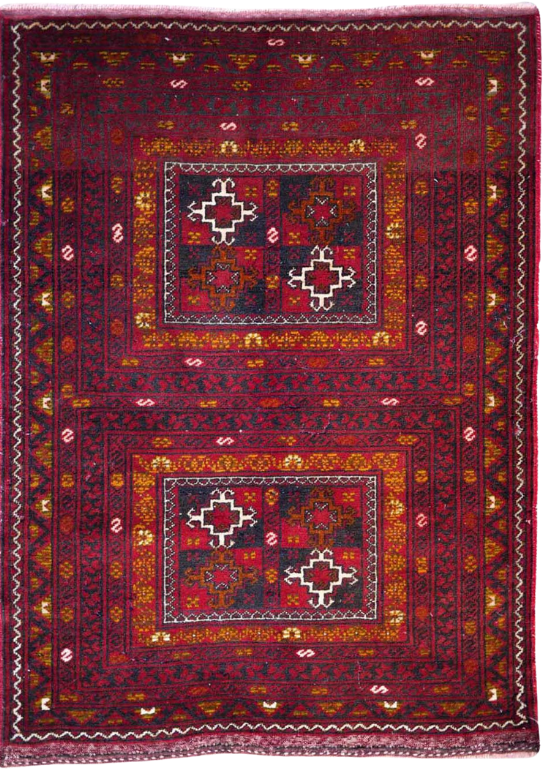
Moroccan Rugs: History, Origin & Collector’s Guide
Discover the soulful, rustic elegance of Moroccan rugs. Hand-woven by Indigenous Berber tribes in the Atlas Mountains and rural regions of Morocco, these iconic carpets are celebrated for their thick plush wool, minimalist tribal iconography, and effortless adaptability to modern interiors.
Introduction to Moroccan Rugs
Moroccan rugs—traditionally crafted by Indigenous Berber (Amazigh) women—are among the most distinct and expressive floor coverings in the world. Unlike formal city workshop carpets with precise symmetrical medallions, Moroccan rugs are deeply personal creations woven without written charts.
Each piece reflects the individual weaver’s life story, emotions, and environmental surroundings, resulting in abstract geometric compositions, plush organic textures, and timeless artistic freedom.
History & Regional Origins
Nomadic Utility
Historically woven not just as decorative floor coverings, but as insulating bed coverings, blankets, and seating pads to withstand the cold temperatures of the High Atlas Mountains.
Indigenous Berber Heritage
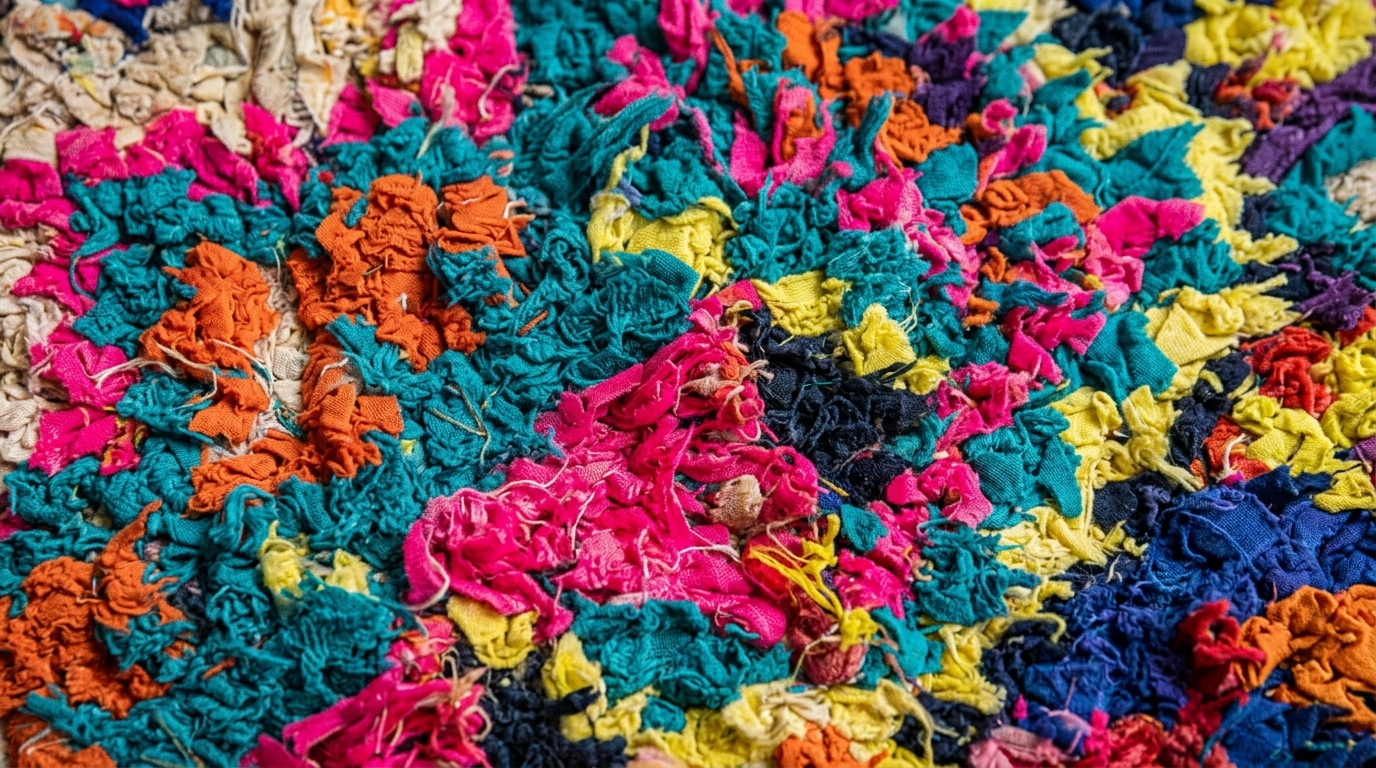
Crafted by various tribal collectives—such as the Beni Ourain, Azilal, Boujaad, and Beni Mguild—each bringing unique dyeing techniques, pile heights, and symbolic motifs.
Mid-Century Modern Icon
In the mid-20th century, modern design masters like Le Corbusier, Alvar Aalto, and Frank Lloyd Wright popularized Moroccan rugs globally, pairing their organic tribal patterns with sleek modernist architecture.
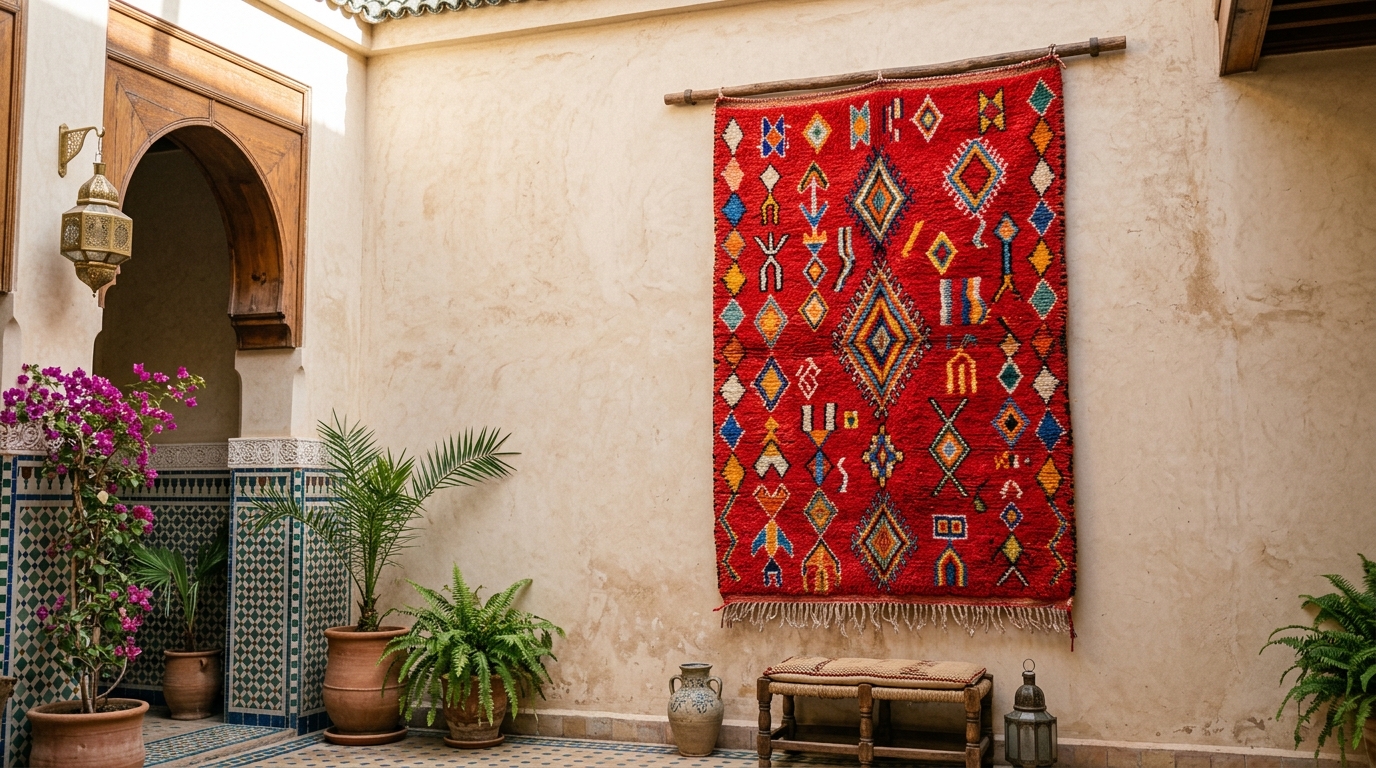
Styling Moroccan Rugs in Modern Spaces
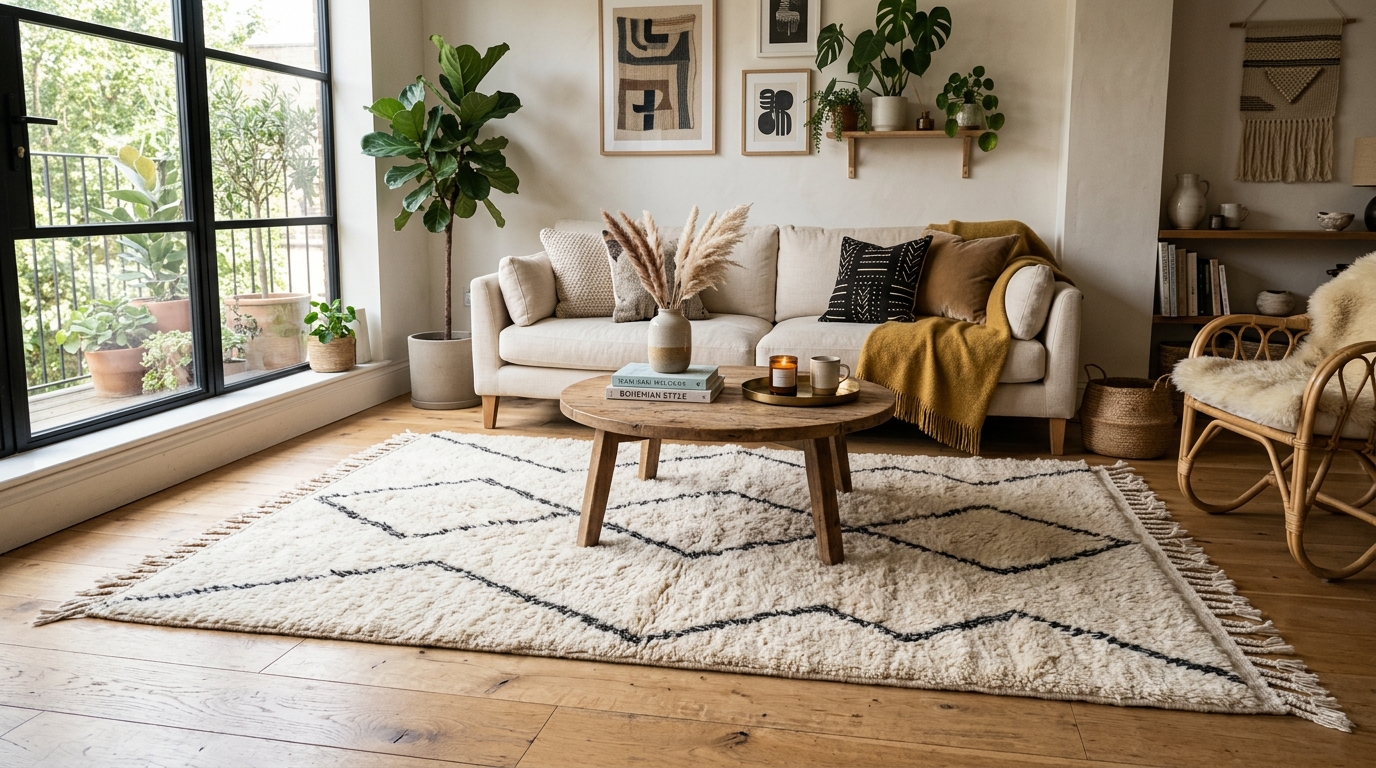
Moroccan carpets are extraordinarily versatile, acting as soft neutral anchors or bold modern art statements:
Care Tip
Caring for Your Moroccan Rug
Explore Our Collection
Browse our hand-selected inventory of authentic, hand-knotted Moroccan rugs.